
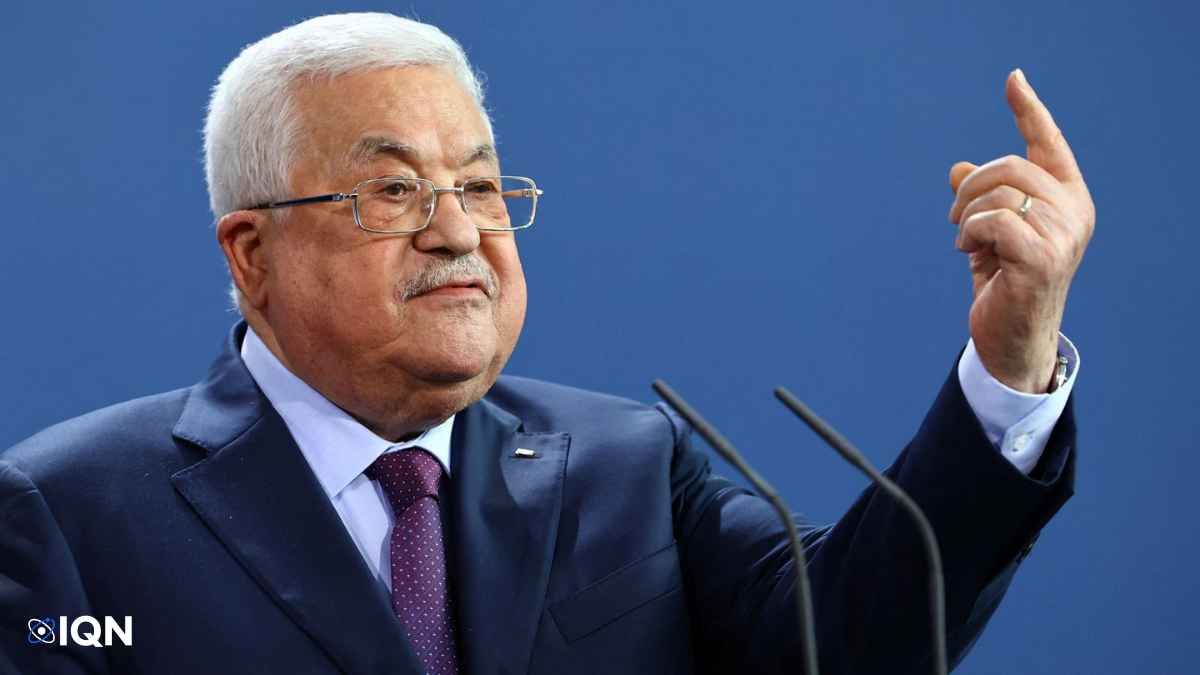
IQN (NewsDesk): Palestinian President Mahmoud Abbas addressed the United Nations General Assembly on Thursday, delivering a forceful condemnation of Israel’s military campaign in Gaza and describing the situation on the ground as nothing short of a humanitarian catastrophe.
Abbas was unable to travel to New York in person for the address. The United States had refused to issue visas to members of his delegation, a decision he opened his remarks by directly criticizing. He told the Assembly that denying his officials entry undermined the very forum meant to give voice to nations and peoples navigating conflict, and argued that the move reflected a broader pattern of the international community sidelining Palestinian representation at critical moments.
Speaking through a video link projected onto screens inside the General Assembly hall, Abbas painted a grim picture of conditions across the Gaza Strip. He described entire neighborhoods reduced to rubble, hundreds of thousands of people displaced multiple times as fighting shifted across the territory, and a healthcare system that he said had effectively collapsed under the weight of casualties and blockades on medical supplies. He cited shortages of clean water, fuel and basic foodstuffs as evidence of what he called a deliberate strategy to make life in Gaza unsustainable.
The Palestinian leader used much of his address to call on the international community to move beyond statements of concern and take concrete action, including renewed pressure for an enforceable ceasefire, unrestricted humanitarian access and accountability mechanisms for violations of international law committed during the conflict. He argued that half measures and temporary pauses in fighting had repeatedly failed to protect civilians and that a durable political solution was the only way to prevent future cycles of violence.
Abbas also used the platform to reiterate the Palestinian Authority’s long standing demand for full statehood, framing it as inseparable from any lasting resolution to the conflict. He argued that recognition of Palestinian sovereignty was not a reward to be granted after peace, but a precondition for achieving it, and urged member states that had not yet formally recognized a Palestinian state to do so without further delay.
His remarks came during one of the most closely watched weeks of the year at UN headquarters, with a lineup of global leaders taking the podium over consecutive days. Israeli officials, including senior cabinet ministers, are expected to respond directly to the accusations leveled by Abbas and other speakers, setting up a further round of sharp exchanges over the coming days as the General Assembly’s general debate continues.
Diplomats inside the hall described a subdued but attentive atmosphere during the address, with delegations from several Arab and European states offering visible support, while others withheld reaction, reflecting the deep divisions that continue to define international responses to the war.